Serbia Students Win 52.7%: Vucic Era Ends
Serbia woke up on Monday to a result that would have sounded impossible two years ago. A student-backed protest movement beat Aleksandar Vucic's alliance in Sunday's parliamentary election, and Vucic, who has dominated Serbian politics as prime minister or president since 2014, conceded late on Sunday night. With almost 99 percent of votes counted, the students' candidates had 52.7 percent of the vote against 39.2 percent for the Vucic-led Serbian Progressive Party (SNS) alliance, according to the State Election Commission figures reported in Reuters' Monday account of the defeat. The Kremlin's reaction tells you the external stakes: spokesman Dmitry Peskov praised Vucic and urged the new rulers to keep cooperating with Russia, in Reuters' companion report on Moscow's response.
A landslide, not a squeaker
I use landslide carefully. A 13.5-point gap in a two-bloc race, with the winner clearing 50 percent outright, qualifies. The seat math is even clearer than the vote math, and it is the same discipline I brought to the Brazil runoff count yesterday: read the allocation, not the mood.
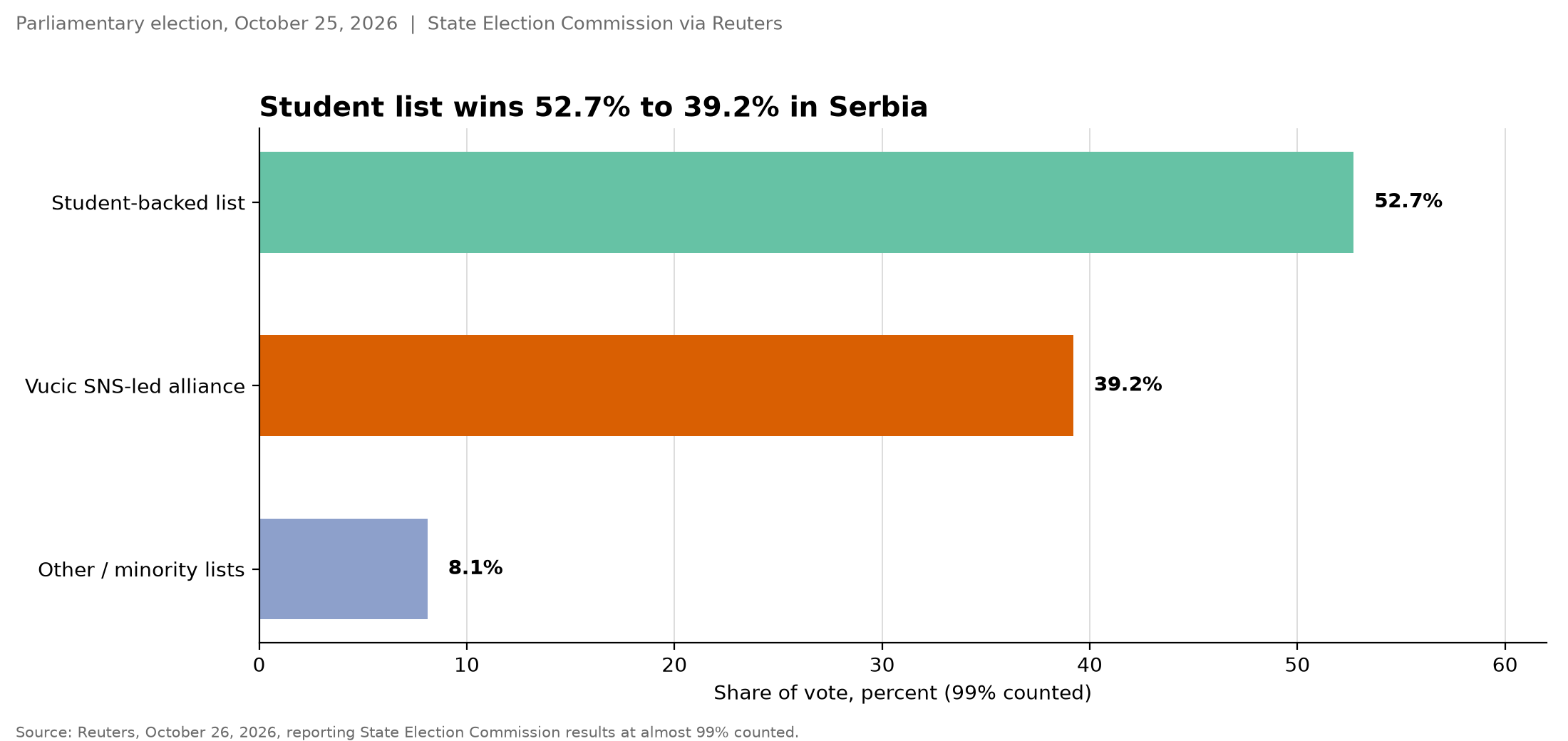
Figure 1: Vote share at almost 99 percent counted. Source: State Election Commission via Reuters, October 26, 2026.
| Bloc | Vote share | Seats |
|---|---|---|
| Student-backed list | 52.7% | 139 |
| SNS-led alliance | 39.2% | 97 |
| Minority parties (remainder) | 8.1% | 14 |
| Total / majority threshold | 100% | 250 / 126 needed |
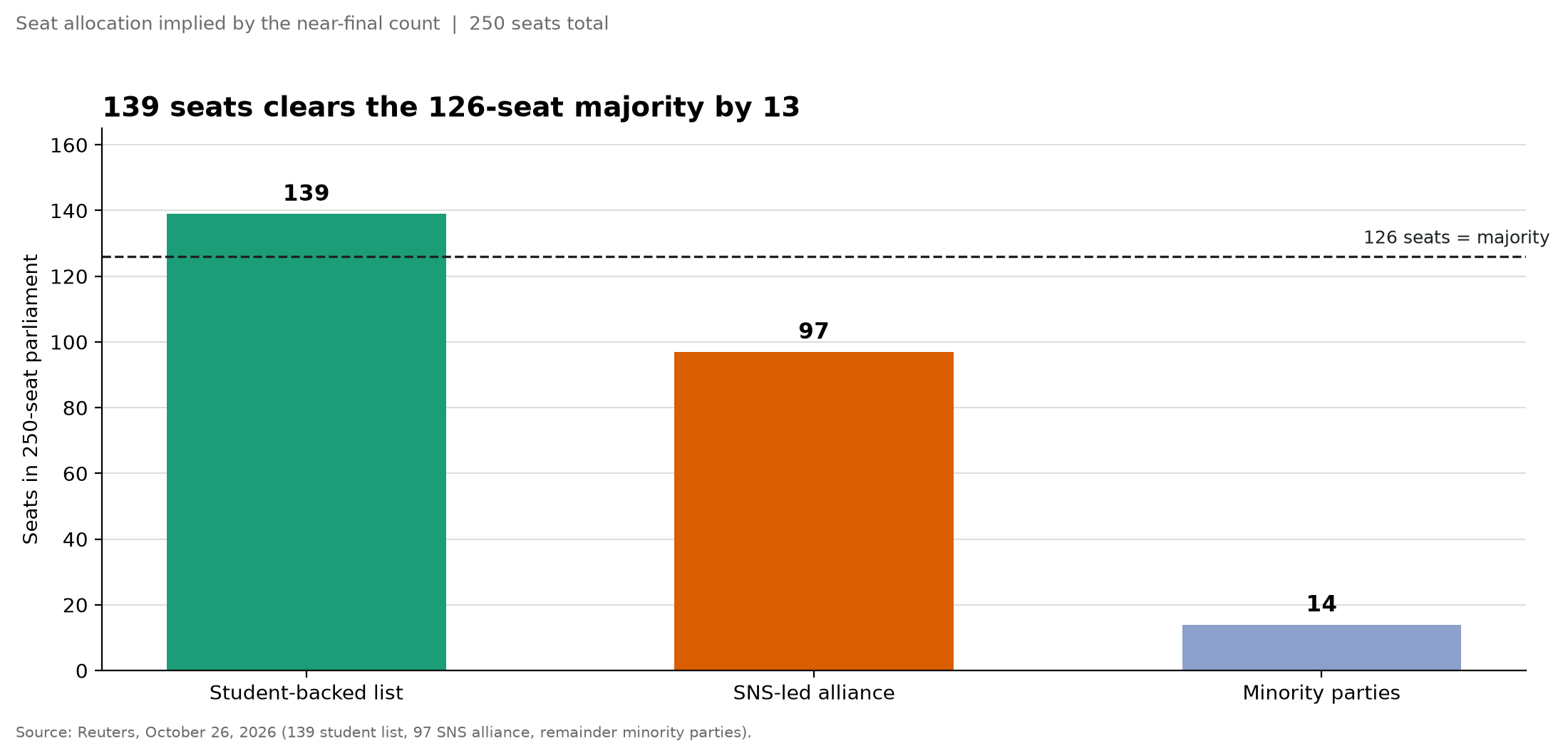
Figure 2: Seats in the 250-seat parliament. Source: Reuters, October 26, 2026.
How a canopy collapse became a government
The movement was born after 16 people died in the collapse of a train station canopy in Novi Sad, a disaster that set off two years of peaceful anti-government protests demanding accountability. That origin matters for what comes next. This was not a conventional party with a conventional program. It was a protest list that turned street endurance into an electoral machine, first by surviving two years of pressure, then by translating turnout into a majority of 139 seats, 13 more than the 126 needed to govern alone. Tens of thousands celebrated in Belgrade and other cities on Sunday night, and Reuters notes the honest uncertainty underneath the celebration: few yet know how the new leaders will govern.
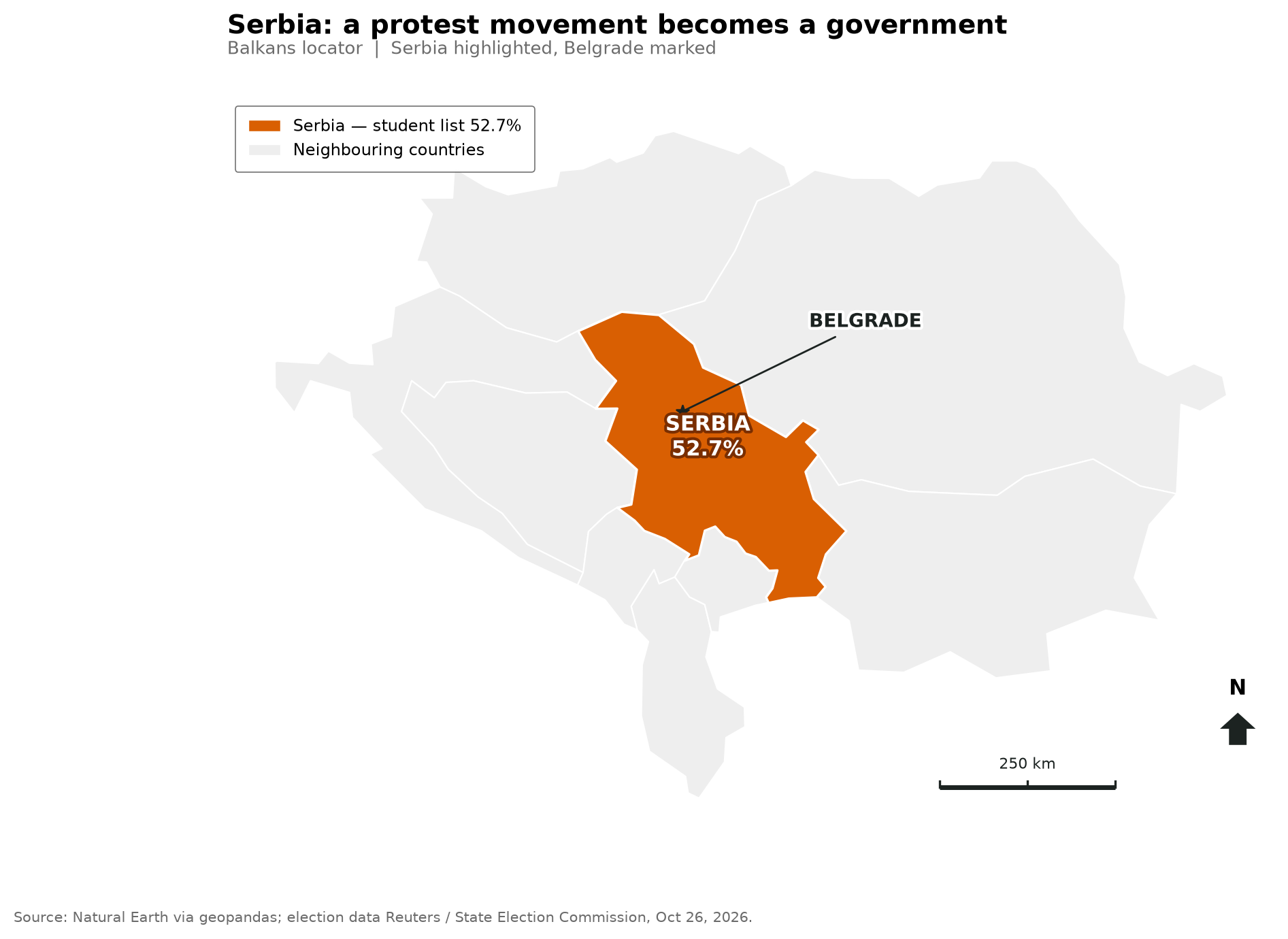
Figure 3: Serbia highlighted with Belgrade marked. Source: Natural Earth; election data Reuters.
The two tests that start now
The first test is governing competence. A movement built to say no to corruption now owns budgets, ministries, and the same state apparatus it protested. The second test is direction. Serbia aspired to join the European Union while refusing EU-backed sanctions on Russia over Ukraine and keeping close economic, political, and military ties to Moscow. Peskov's statement, that cooperation with Russia is in Serbia's own interest and that "it takes two to tango," is an opening bid, not a description of the new government's position. Watch the first foreign-policy signals the way I watched the Alberta referendum count: the early percentages and appointments will tell you more than the speeches. ## What the result does not settle
Three things remain open even with a near-final count. First, the presidency itself is a separate office, and Vucic remaining a political figure in opposition, as Peskov pointedly noted, means the old network does not vanish on Monday morning. Second, a student list is a coalition, and coalitions that agree on what they oppose have to learn, in public, what they support on prices, energy contracts, and public sector pay. Third, the count that matters for legitimacy is turnout and acceptance, and on acceptance the early signs are good: the loser conceded on election night rather than contesting the count in the streets. Those three unknowns are why this is a beginning and not an epilogue.
For Moscow, already counting the defeat of Viktor Orban in Hungary six months earlier, Serbia is a second European partner lost in one year. For the students, the harder election starts today, and it has no count to concede it.
Get the newsletter
New articles and the occasional deep dive. No spam.
Unsubscribe anytime. We never sell your email.